Help > Timeshare Fraud Education
Latest Timeshare Fraud News
Articles:
- Former New Jersey Resident Pleads Guilty to Charges Targeting Timeshare Owners Over the Age of 55
- The U.S. Treasury Department sanctioned a "brutally violent" cartel for timeshare fraud targeting Americans, warns current U.S.-based timeshare owners
- Timeshare Industry Launches The Timeshare Consumer Protection Center to Help Owners Learn About Their Exit Options, Avoid Timeshare Exit Scams
- UK Fraud Office appeals for information on suspected timeshare scam
- Court Orders Nearly Half a Million in Penalties and Restitution Against Timeshare Exit Scammers
Protect Yourself Against Fraud
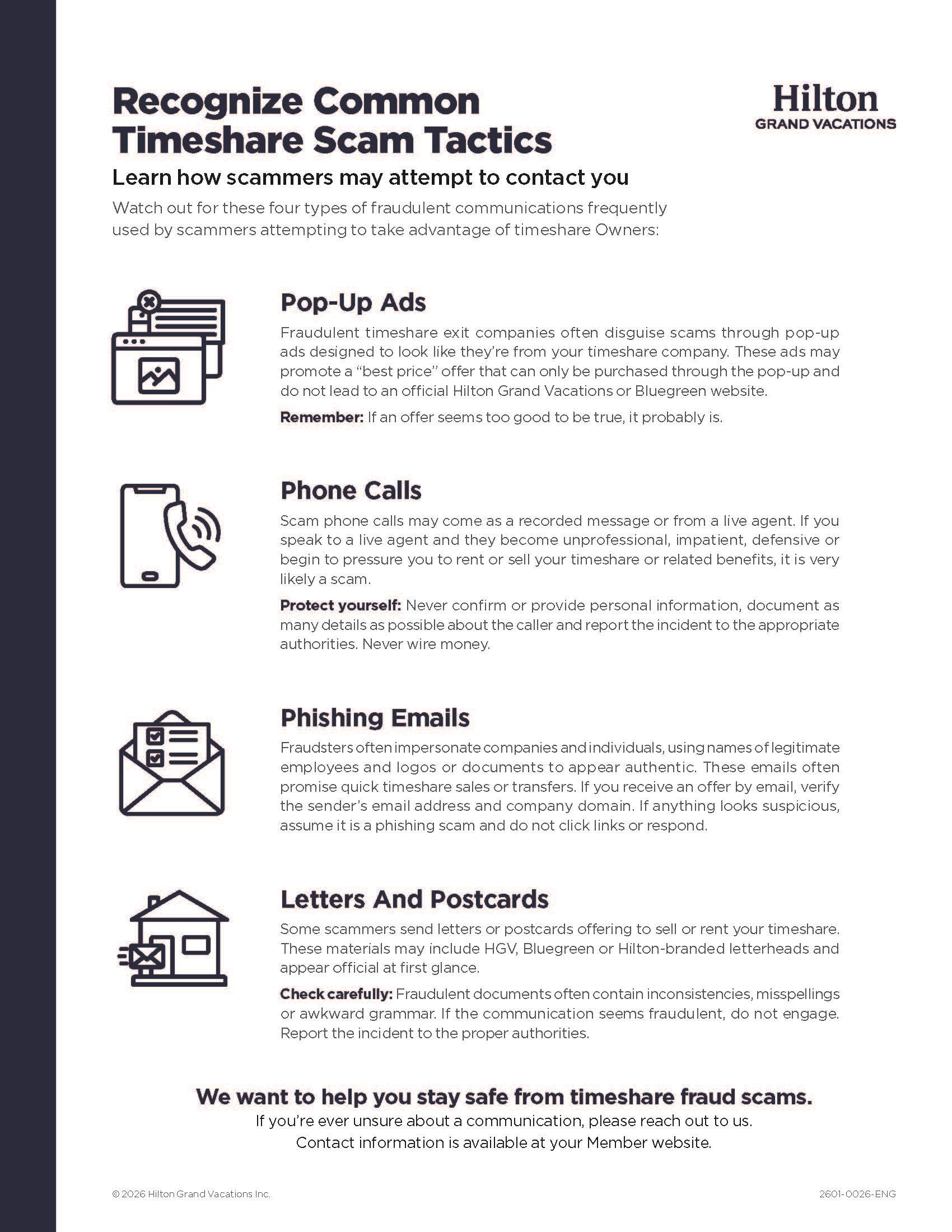
Unscrupulous third parties are increasingly trying to defraud consumers, specifically timeshare Owners. These fraudulent timeshare schemes often say they can rent, sell or advertise your timeshare exchange benefits, or may even claim you have weeks, certificates or points you have not used that they can help sell on your behalf.
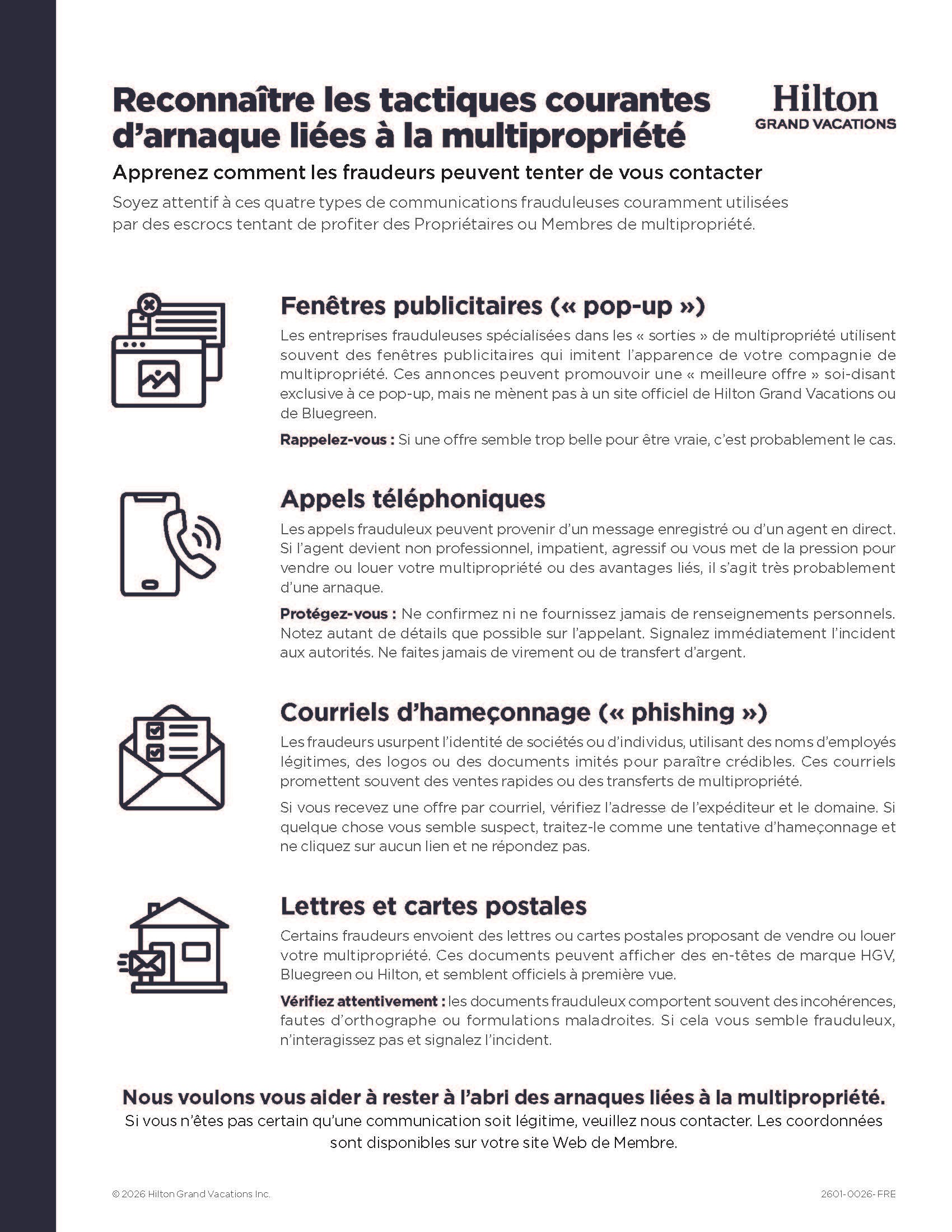
The good news is that scams often follow the same patterns and use similar tactics. There are ways to protect yourself from these scams, and the first step is knowing how to identify them.
Read below for tips on how to identify fraudulent offers and common scams, educational tools and resources, and how to report an incident.
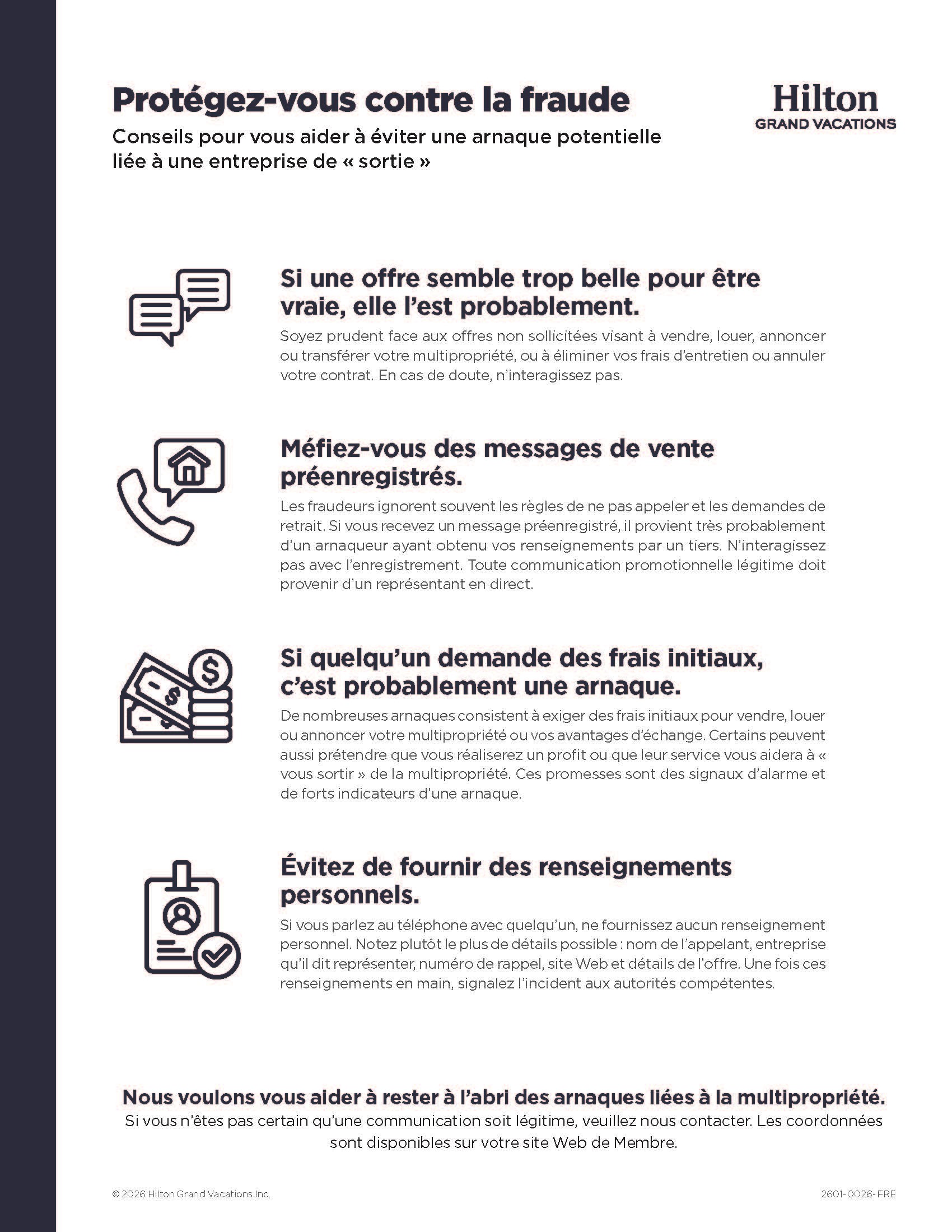
Tips to Identify a Fraudulent Timeshare Scam
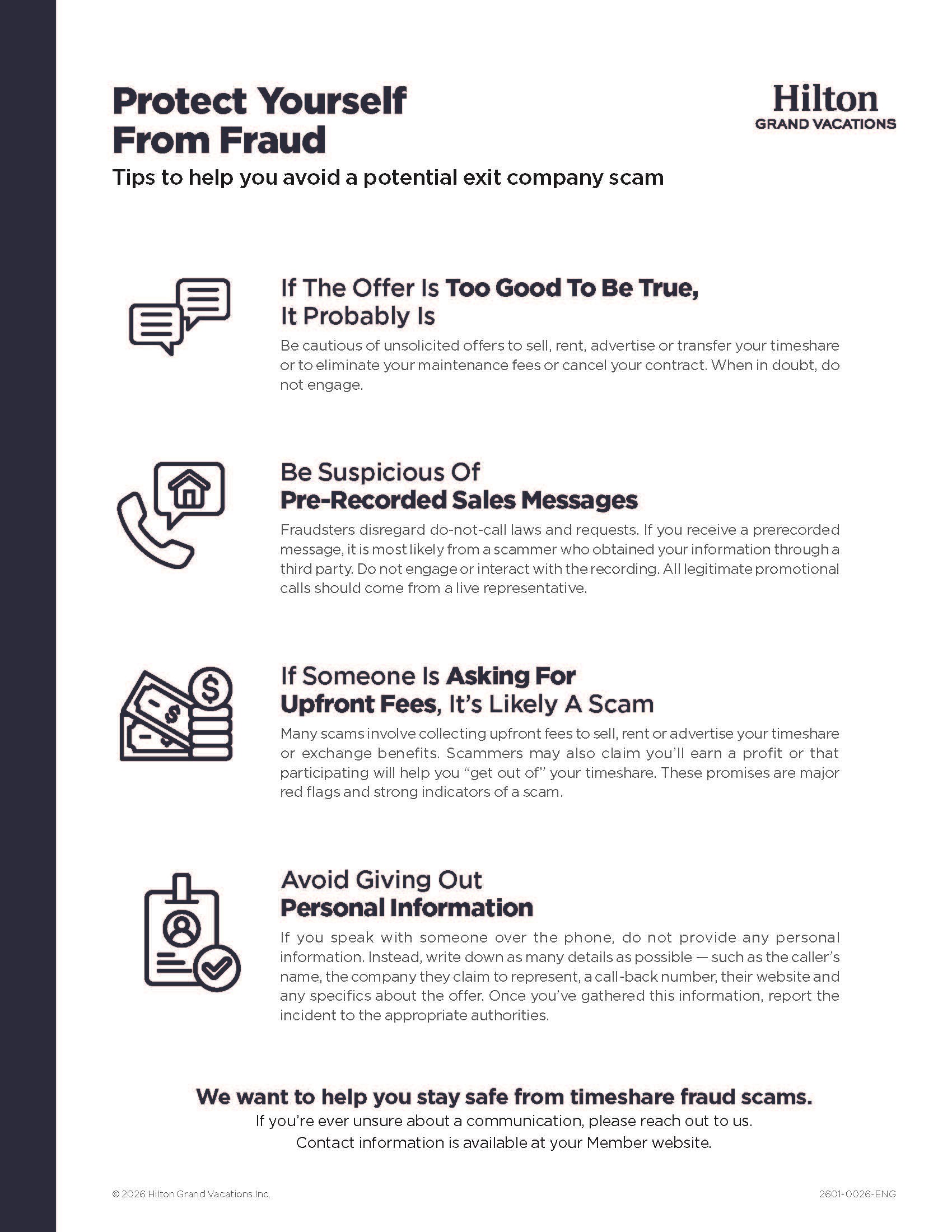
- If the offer is too good to be true, it probably is.
- Be suspicious of pre-recorded sales messages.
- If someone is asking for upfront fees, it’s likely a scam.
- Be wary if they ask for personal information, especially information they should have on record.
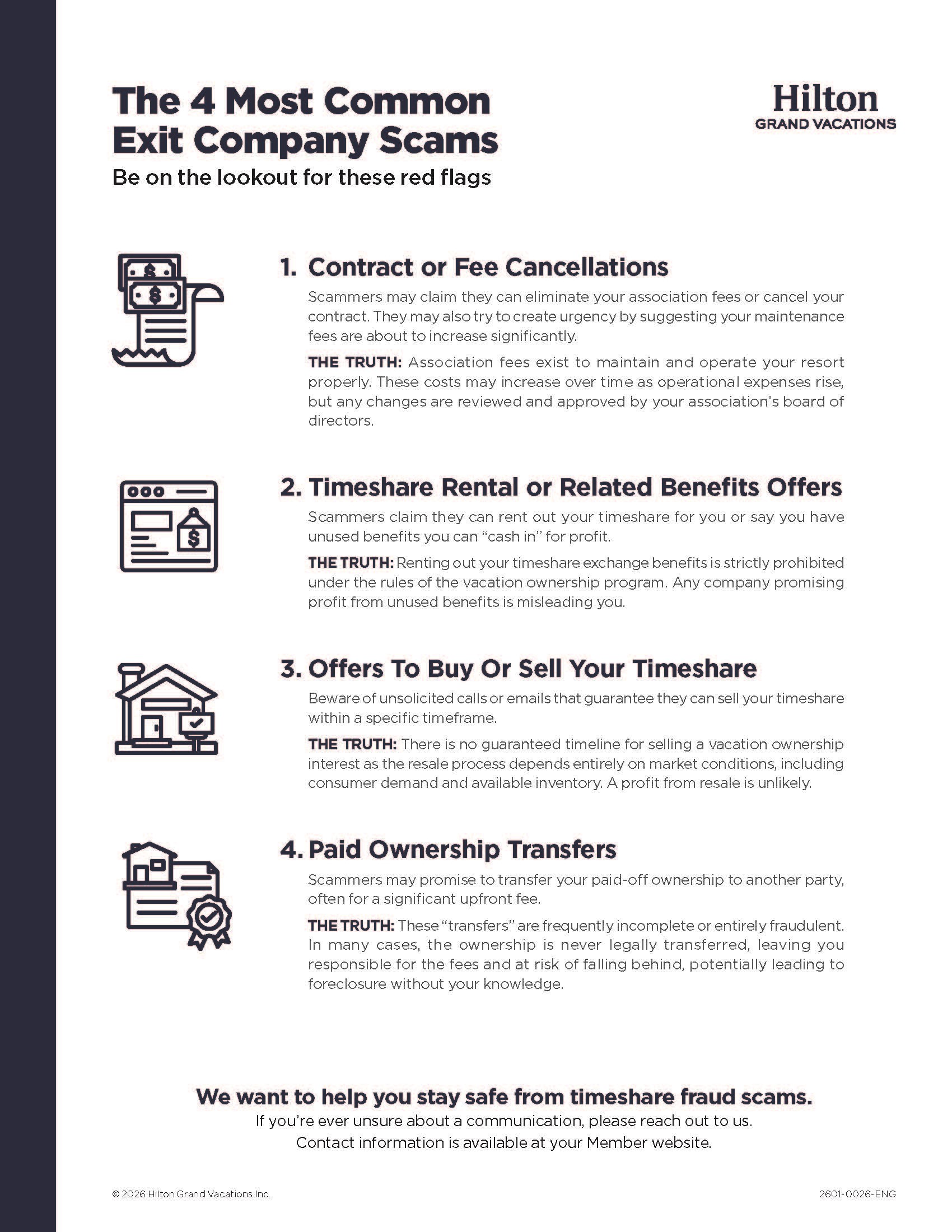
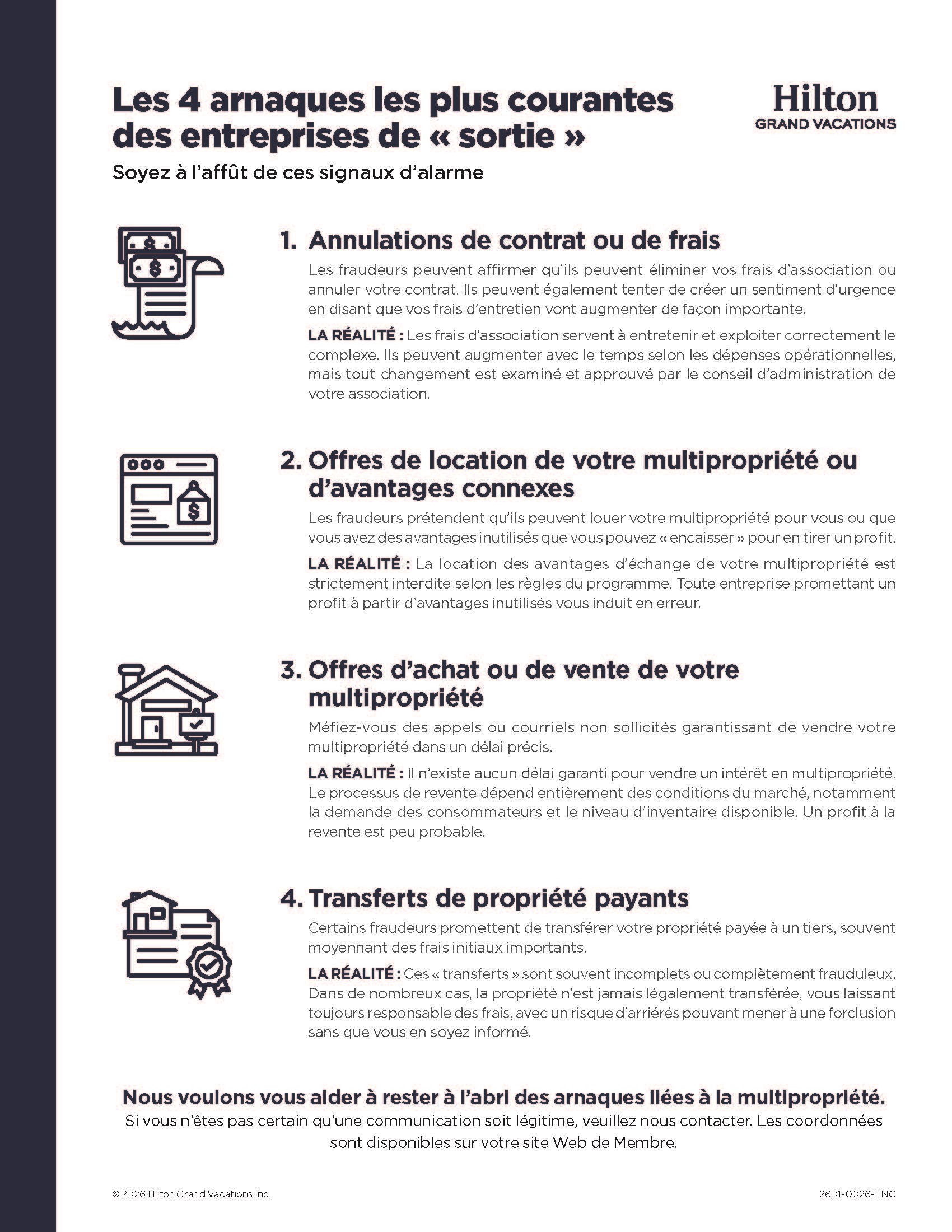
Common Fraudulent Schemes
- Elimination of fees, including homeowners associations fees, or contract cancellations.
- Offers to rent your timeshare exchange benefits.
- Offers to buy or sell your timeshare.
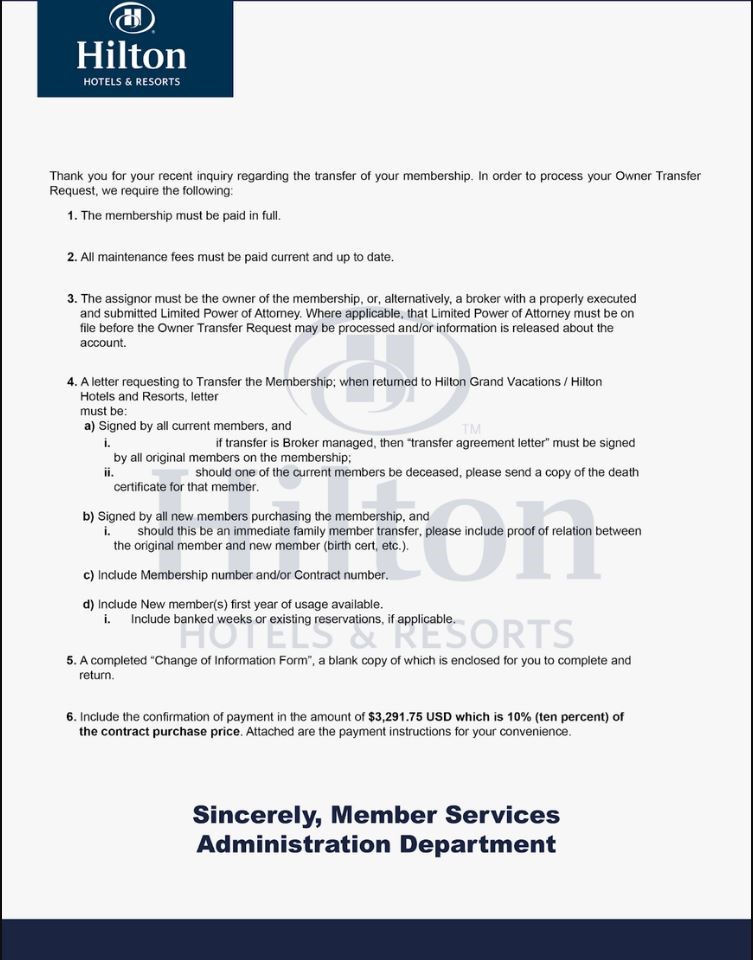
- Paid ownership transfers.
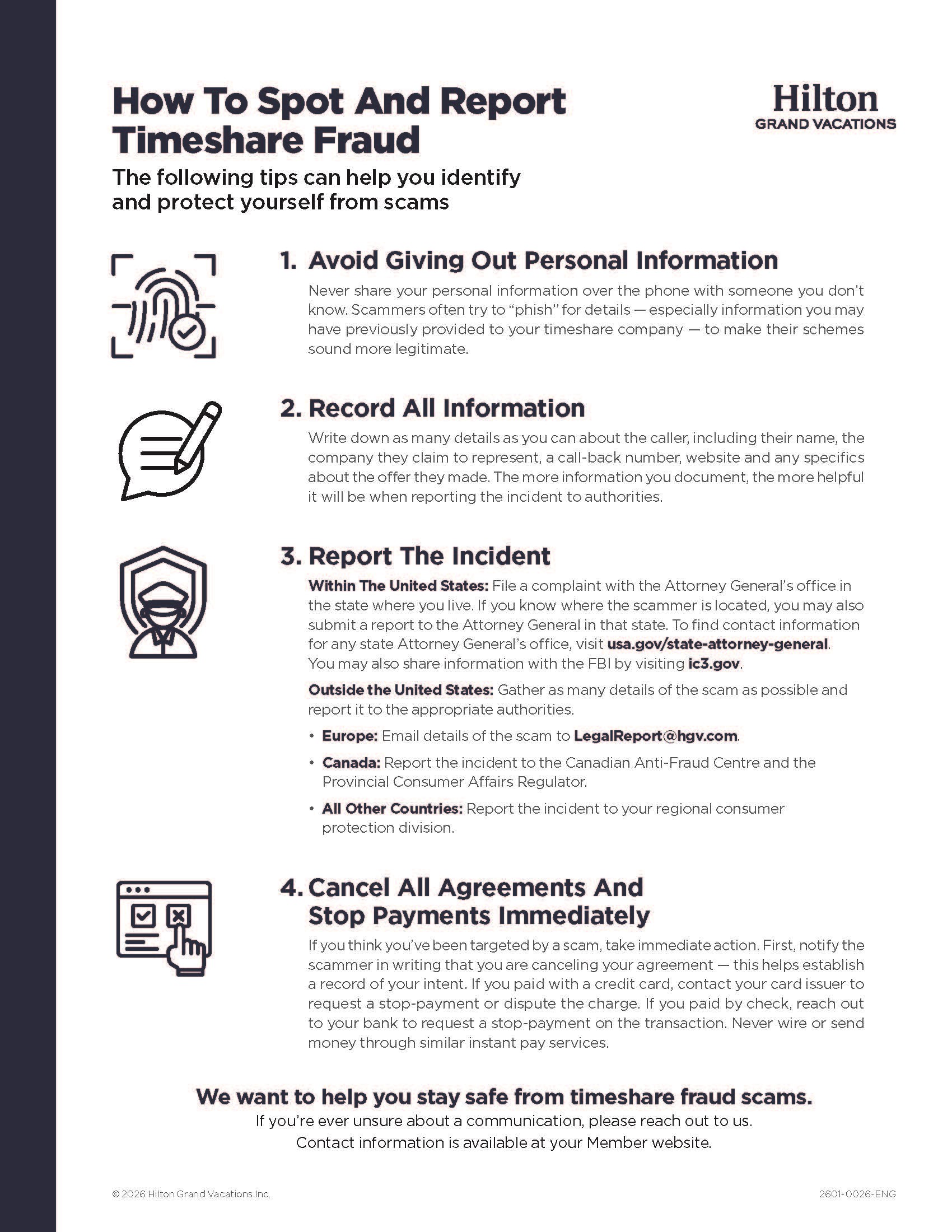
As part of HGV's commitment to protecting you from fraudulent schemes, we have created helpful, educational flyers and videos to ensure you're up-to-date on the latest tactics used to deceive timeshare Owners.
To view the resources in English, please refer to the section below:
To view the resources in French, please refer to the section below:
Stay Smart, Stay Safe: Outsmarting Timeshare Scams
Click on the “Settings” icon located next to “CC” in the bottom right corner of the playback
bar to choose closed captioning/subtitle options in English, Spanish or French.
HGV Timeshare Fraud Resources
HGV has produced a variety of educational content to protect Owners from timeshare exit scams. The following blogs, videos and Club Traveler articles were developed to inform you on how to stay protected against fraud.
HGV Content:
- Protect Yourself: 4 Tips to Spot Timeshare Fraud: This informative video highlights four key ways to spot timeshare scams, report suspicious activity and safeguard your private information.
- 5 Must-Know Tips to Avoid Timeshare Fraud and Protect Your Membership: Follow these five tips to avoid possible timeshare scams and protect your membership.
- How to Research and Identify Timeshare Exit Scams, According to HGV Members: Learn the best ways to detect and report timeshare exit fraud directly from Members like you.
- Protect Your Ownership: How to Avoid Timeshare Fraud: Follow these five tips to avoid possible timeshare scams and protect your membership.
- Kiplinger’s Report: Don’t Fall for Timeshare Exit Scams: The blog discusses a Kiplinger story on exit company scams that are targeting older timeshare Owners.
- Protect Yourself: How to Recognize and Avoid Timeshare Fraud: This video shares helpful tips for identifying timeshare fraud and how to protect your personal information.
Club Traveler Articles:
- Protect Your Vacation Ownership: Various fraudulent schemes are outlined with important information on what suspicious activity might look like, so that you can remain vigilant against fraud.
- Stay Safe From Timeshare Fraud: An informative video and other resources are shared with instructions for reporting suspicious activity to authorities.
- Protect Yourself Against Timeshare Fraud: Learn how to protect yourself from timeshare scams and spot fraudulent schemes before they happen.
- Protect Yourself Against Fraud and Keep Your Timeshare Safe: This article reports on a Club Member who fell victim to third-party fraud and shares how that Member’s situation was resolved.
- Tips to Protect Yourself From Exit Company Schemes: This article shares tips to help you fend off scammers and keep your HGV timeshare exchange benefits safe.
- A Guide to Spotting Exit Company Fraud: Common fraudulent schemes are identified in this article and it also details how scammers work.
Other Educational Tools & Resources
Following is a list of educational tools and other resources for more information on the topic:
- Federal Bureau of Investigation: The FBI outlines important resources that explain how timeshare fraud occurs, ways to avoid and report these scams and additional resources.
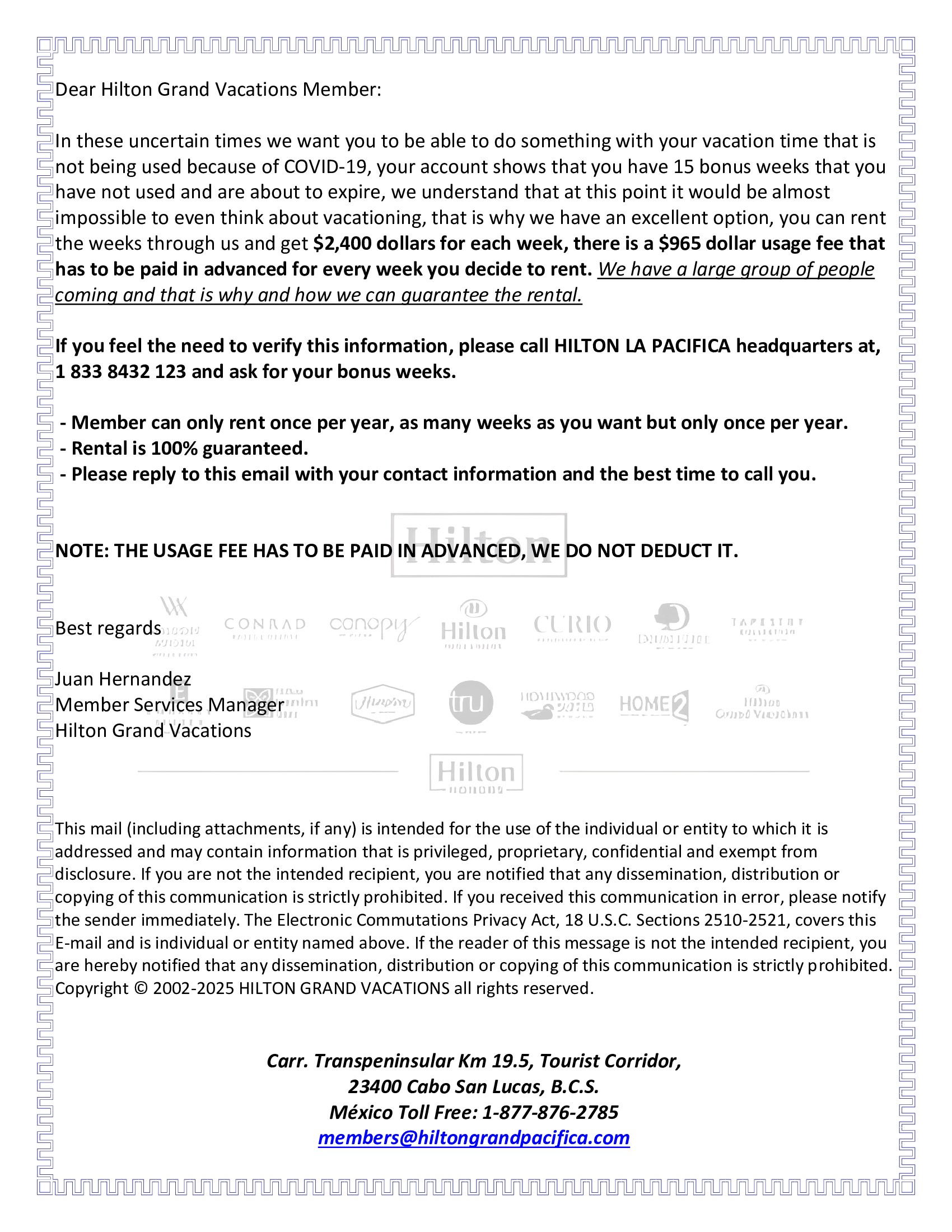
- Sample of fraudulent communication.
- American Resort Development Association: The website provides helpful information for timeshare Owners, including the latest news and scam alerts in the resale market.
- Better Business Bureau Study: The study provides insights into third-party exit companies based on complaints and documents from more than 400 consumers who believed they were victimized by exit companies in the Springfield, Missouri area.
- U.S. Federal Trade Commission: The government agency provides articles and blogs on the topic. To access these, type “timeshare resale scams” in the search bar.
- List of Third-Party Exit Companies: Check out this page from RCI for a list of potential offenders.
- VacationTimes.org: This page contains a scrolling feed featuring the latest industry news and timeshare fraud alerts.
- Federal Trade Commission | Consumer Advice - This Consumer Alert from the Federal Trade Commission details helpful information to protect yourself from avoid timeshare resale scams.
- Timeshare Consumer Protection Center: ARDA, the trade association for the vacation ownership and timeshare industries, has launched The Timeshare Consumer Protection Center (TCPC) to help owners considering timeshare exit get accurate, helpful information free of charge.
Timeshare Fraud in the News
- Timeshare Owner? The Mexican Drug Cartels Want You (Krebson Security)
- Treasury Sanctions Cartel Accountants, Announces Joint Notice on Timeshare Fraud in Mexico (U.S. Department of the Treasury)
- Illinois Attorney General Warns of Rising Timeshare Resale Scams (WSIU News)
- Mexican National Who Participated in Timeshare Fraud Scheme is Sentenced
Reporting Timeshare Fraud
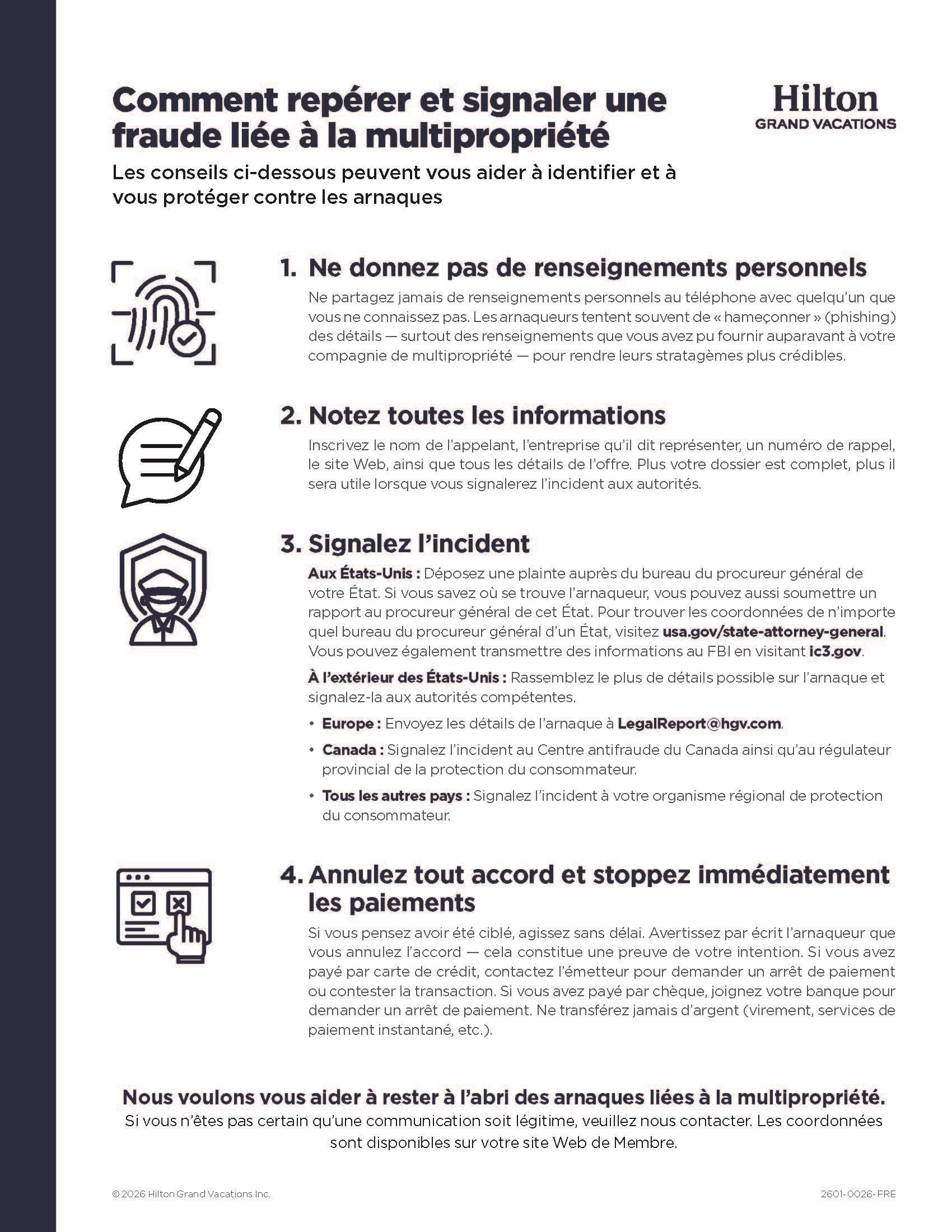
If you are a victim of a fraudulent timeshare scheme or have received deceitful solicitations, follow the steps below:
- Contact the Authorities
- United States: You can file a complaint with the Attorney General’s Office in the state where you reside. Not sure how to find your AG’s office? Click here to find a location.
- Europe: Gather as many details of the scam as possible and email them to us at LegalReport@hgv.com.
- Canada: You can report the incident to the Canadian Anti-Fraud Centre and the Provincial Consumer Affairs Regulator.
- Other Countries: You can report the incident to your regional consumer protection division.
- Stop Payment immediately
If you paid the scammer with a credit card, contact your card company and request a stop payment. Request a stop payment from your bank if you’ve paid by check. - Contact Us
- If you received a suspicious solicitation and are unsure whether it’s part of a fraudulent timeshare tactic, contact your Club and Owner Services team.
- If you’re a victim of a fraudulent timeshare tactic, you can contact us by completing the Incident Intake Questionnaire and emailing it to us at Privacy.Matters@hgvc.com.
Additional Owner Resources
Besides protecting your vacation ownership benefits against fraudulent timeshare schemes, it is equally important to learn about the communications you can expect from Hilton Grand Vacations. Throughout the year, we will communicate with you about different aspects of your timeshare ownership. These communications include emails or letters regarding:
- Member Solutions page, including questions and answers about the resales process.
- HOA billing statements.
- Taxpayer identification information.
- Retraction communication from Resort Legal Team.
- Financial verification notices.
- HGV’s privacy policy, notice of error and credit reporting process.
When in doubt, visit the Owner Information webpage for more details.
Remember: Always be vigilant about any unsolicited offers to sell, rent or advertise your timeshare and reach out to us immediately for any questions or concerns.